












Read this in The Manila Times digital edition.
First of two parts
MY work on migrants — specifically, their language concerns and experiences — has inevitably placed me within the broader enterprise of recognizing diversity and promoting inclusivity in society. Migration, after all, makes diversity visible. It brings people of different languages, cultures and religions into contact with one another. It reminds us that societies are not homogeneous entities but dynamic communities shaped by different backgrounds and experiences.
For this reason, the study of migration is never simply about migrants. It is also about the societies that receive them and the institutions that serve them. It is about how we respond to human diversity. It is about whether our communities create opportunities for participation and belonging or reinforce barriers to inclusion.
In today’s globalizing world, diversity and inclusivity have become central concerns in discussions of sustainable development and social transformation. Governments, businesses, institutions and organizations increasingly recognize that societies function best when differences are not merely tolerated but valued. Educational institutions occupy a particularly important place in this endeavor. Schools and universities are among the first social institutions where individuals encounter people whose backgrounds differ from their own. They are therefore uniquely positioned to cultivate understanding, empathy and respect for diversity.
Yet this task has become increasingly complex — and perhaps more perplexing — with the rise of artificial intelligence. Artificial intelligence (AI) is transforming nearly every aspect of contemporary life. It is changing how we communicate, how we work, how we access information, and increasingly how we teach and learn. Educational institutions around the world are now grappling with profound questions about the role of AI in classrooms, assessment, research and leadership. Some see AI as a revolutionary tool capable of personalizing learning and expanding access to education. Others worry about its implications for academic integrity, human agency, privacy and inequality.
The truth is that both perspectives are correct. Artificial intelligence presents extraordinary opportunities for education. AI-powered systems can help identify learners who need additional support. They can provide adaptive learning pathways tailored to individual needs. They can translate educational materials across languages and make learning resources more accessible to geographically isolated communities. For learners with disabilities, AI offers new possibilities for accessibility and participation. For educators, it can reduce administrative burdens and free time for teaching, mentoring and human interaction.
At the same time, AI raises significant concerns. Technologies trained on biased datasets may reproduce existing inequalities. Learners without reliable internet access or digital devices may be further marginalized. AI systems developed primarily in dominant languages may fail to serve multilingual communities effectively. Most importantly, there is always the danger that educational institutions become so fascinated with technological efficiency that they lose sight of education’s deeper human purposes.
These are precisely the issues that I will explore as the inaugural lecturer of The Mapúa Co-Intelligence Lecture Series. Mapúa University has long-established itself as one of the country’s leading institutions in technological innovation. The university has traveled a remarkable journey throughout its century-long history. Today, it ranks second among Philippine universities, based on the 2026 Times Higher Education Asia University Rankings and is the top Philippine school in the fields of computer science, engineering, physical sciences and social sciences. Much of this success reflects the vision of its president, Dodjie Maestrecampo, together with the leadership of many capable administrators, including School of Education and Foundation Studies Dean Edward Jay Quinto.
Consistent with its commitment to innovation, the university’s Center for Teaching and Learning is inaugurating The Mapúa Co-Intelligence Lecture Series, a distinguished lecture platform that brings together leading international scholars to reflect on the implications of artificial intelligence for teaching, learning, assessment, research and educational leadership.
I am deeply honored to serve as the inaugural lecturer of the series. My lecture, “Diversity and Inclusivity in Education in the Age of Artificial Intelligence,” examines one of the defining educational questions of our time: How can educational institutions harness the power of AI while ensuring that no learner is left behind?
The inaugural lecture of The Mapúa Co-Intelligence Lecture Series will be delivered on June 15, 2026, at 1 p.m., at the Global Classroom of the Mapúa University Makati Campus. The ideas presented in this column are drawn from the first part of the lecture, while next week’s column will focus on its second part.
To be concluded on June 19, 2026
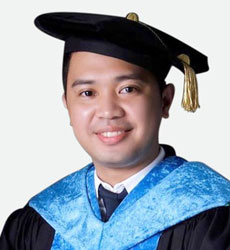
Ariane Macalinga Borlongan is a public intellectual, language scholar and migrant advocate. He is one of the leading researchers on English in the Philippines and one of the pioneers of migration linguistics. He is the youngest to earn a doctorate in linguistics, at age 23, from De La Salle University, and has had several teaching and research positions in Germany, Japan, Malaysia, the Philippines, Poland and Singapore. He is currently associate professor of sociolinguistics at the Tokyo University of Foreign Studies.