












You’ve probably seen them in photos.
A gigantic archway spiraling over Beverly Boulevard in Los Angeles, California, marking the eastern entrance to that city’s Historic Filipinotown. Entitled “Talang Gabay: Our Guiding Star,” the iconic gateway — the largest of its kind in America — is a vibrant symbol celebrating the cultural heritage of Filipinos everywhere.

Then there is the 150-foot mural adorning nearby Unidad Park. Recognized by the Smithsonian Institute as the flagship visual identity of Filipino Americans, the piece encapsulates centuries of Philippine history, depicting heroic figures such as Jose Rizal, Lapu-Lapu, and California farm-labor organizer Larry Itliong.


And of course, there are the two award-winning Philippine-themed floats that have graced Pasadena’s famous Rose Parade, beckoning in each new year, as well as the glistening shrine at LA’s St. Columban Church.


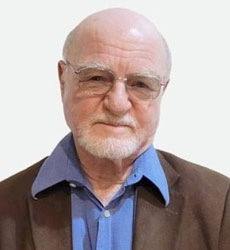
All of them were created by a man who describes his work as a lifelong mission. His name is Eliseo Art Silva. His mission: to resurrect what he sees as a lost Golden Age of Filipino art and culture.


“Everything we need is already in front of us,” says Silva, 54, who lives in Corona, roughly 80 kilometers southeast of Los Angeles. “We just need to bring attention to that narrative.”
The narrative’s essence, he believes, reflects two previous eras of pristine achievement in the Philippines: the precolonial period, when Magellan first arrived on that nation’s virgin shores, and 1898, when the country threw off Spanish rule to briefly become the first independent democratic republic in Asia.
The task now, he says, is to artistically “center the narrative so that we are the protagonists of our own story.”
He wasn’t always a man on a mission. Born in Manila in 1972, the year Ferdinand Marcos declared martial law, Eliseo discovered art early. The oldest of seven children in a family of bankers and entrepreneurs, Silva remembers wrapping pandesal in the bakery owned by his parents. Eventually, he began drawing pictures on the wrapping paper, prompting his mother to buy him art supplies for school.
“I became an art star,” he recalls, “because my teachers would give me little books” to illustrate for classmates.
Eventually, Silva — who sold his first painting at 11 — began representing his school in art contests, usually winning first place. Later, he attended the Philippine High School for the Arts (PHSA) on a full scholarship, graduating with honors and completing his first mural at 14, just days after participating in the EDSA People Power Revolution.
All of which was supported by a home full of local art.
“It was like a presence,” Silva says of the paintings and sculptures strewn throughout the house his family occupied. “I mean, Filipino art was everywhere.”
He was only 17 in 1989 when his family emigrated to America. Though initially reluctant to go, he eventually accepted the change. “I didn’t really want to be here,” Silva says today, relaxing in the den he shares with his parents in Southern California. “But I felt that God wanted me to come.”
And yet he hasn’t forgotten his native land, nor given up his Filipino roots. In fact, nearly four decades later, Eliseo is still the only member of his family who has never become a US citizen. “I didn’t want to be dual,” he explains. “I have no desire to be an American.”
And, indeed, life as a celebrated member of the Philippine diaspora has been touch-and-go. Today Silva’s time is largely spent fulfilling commissions to create murals or other forms of art, writing books, giving interviews, and making public appearances.
But it wasn’t always so. Silva’s work on the iconic “Gintong Kasaysayan, Gintong Pamana” mural at Unidad Park — probably the most famous Filipino artwork in America — started when Silva was a 22-year-old immigrant student working on his bachelor’s degree in fine arts at LA’s Otis College of Art and Design.
“He did an amazing job telling the history of Filipino culture from the early days of colonization [through] Jose Rizal to the California grape strikes,” says Lyle del Mundo, a Filipino cultural consultant in Los Angeles and former board president of the nonprofit Search to Involve Pilipino Americans. “It’s all captured in this one piece.”
Later, Silva received a Master of Fine Arts (MFA) from the Maryland Institute College of Art, which he attended on a fellowship. And later still, he spent five years in Philadelphia, Pennsylvania, creating many murals as part of a city-sponsored program. Among them: “Tree of Life,” integrating ceramic tiles created by residents representing community memories of Nicetown Park; “Heavenly Thoughts,” “Be the Change,” “Wall of Inspiration,” and “Coming to America and Making it Better” painted on non-woven cloth.
But none of them had Filipino themes. “There wasn’t even one Filipino mural on the East Coast,” Silva recalls, “so I decided not to leave until I could do at least one. That was my goal, and it became my obsession.”
The result was “Alab ng Puso” (My Heart’s Sole Burning Fire), a piece funded by the Filipino American Association of Philadelphia. Touted as, indeed, the first Filipino mural on America’s eastern shore, the work honors the martyrs of the 1898 Philippine War of Independence.
Another result was Silva’s first book, a collection of images entitled “Filipinos of Greater Philadelphia,” published by Arcadia Publishing in 2012. And he’s working on a second volume called “Filipinos of the Inland Empire,” referring to the region of Southern California wherein he now resides.
Returning to that region from Philadelphia, however, turned out to be more challenging than he had imagined.
Depressed by financial difficulties and other issues, Silva relied on painkillers to dampen the hurt. Then he suffered a serious fall, landing in a hospital for two months, where he almost died. “I felt like that was it,” the artist recalls. “I thought I wouldn’t survive.”
Instead, he emerged with a new resolve to accomplish the task at hand. “I knew that God loved me and had a mission for me,” Silva recounts. “And that’s when I realized that nothing else mattered.”
And so, the work continues.
“He’s been one of our cultural bearers for decades,” del Mundo says of Silva. “I see him as an artist, a friend, and someone who wears the Filipino flag on his sleeve. I think he does that without having to think about it; the knowledge he carries comes from living there [in the Philippines] and also living here [in America]. Through his work, he bridges both cultures.”
Cindy Domingo agrees.
“Eliseo has brought to those who view and study his murals a connection between Philippine history, Filipino American history, and how these elements influence and contribute to the formation of our local Filipino community,” explains the prominent Filipino-American activist, labor organizer, and longtime community leader in Seattle, Washington.
“He has brought the elements of spirituality; the people and faces who made history, both in the Philippines and in the US, and the institutions and symbols that contribute to making us who we are,” she adds.
“In designing his murals,” Domingo continues, “Eliseo has shown that he is a historian as well as an artist, often uncovering historical facts that many in our community don’t know. To view one of Eliseo’s murals is to take a step into history as well as the present.”
And, finally, James Fishburne, director of the Forest Lawn Museum in Glendale, California, who curated a major exhibition of Filipino art including some of Silva’s work, describes him as “an incredible artist,” and “a very important figure” in both the Filipino and Fil-Am art communities.
“He is passionate about Filipino history and culture,” Fishburne says, “and very proud of the impact Filipinos have had on American culture. Eliseo is a talented painter who has the ability to work in multiple styles. He seamlessly fuses elements of history in painting, pop art, portraiture, and surrealism, among other genres.”
All of which was broadened and accentuated by the recent fulfillment of a longtime dream: a three-year stay in the land of his birth. He went to the Philippines, Silva explains, because being Filipino is “about cultural authorship. It’s not blood or race, but identity. It’s about being centered and having a core.”
And that requires maintaining a firm connection to the homeland.
So, renting a five-bedroom house in Parañaque from 2021 to 2024, he created a vibrant studio and established a school offering residencies for art students from the University of the Philippines. He also began laying the groundwork for a permanent end to his exile abroad.
“Ultimately,” Silva says, “those three years were a vital steppingstone allowing me to prepare for my long-term return.”
His plan: to develop an “art hub” on family land in Laguna, Iloilo, or Bicol, including a studio, income-generating apartments, and perhaps even another school in which to train a new generation of Filipino artists.
And it is there that he also hopes to marry and raise several children one day. “The Philippines is my goal,” Silva says. “The United States is a detour.”
And yet his mark in the US is lasting and secure. Besides the iconic pieces in Philadelphia, Los Angeles, and elsewhere, his monuments include the Carlos Bulosan Memorial, Pilipino History Mural and Bob Santos Memorial in Seattle, Washington; the Filipino Migration Mural and Larry Itliong Memorial Mural in Sacramento and Delano, California; the Philippine Masters Collection in Carson, California; the Philippine Nationality Room at the University of Pittsburgh; and the Pinoy Capital Crown in Daly City, California.
Not to mention, of course, the untold number of monuments to Filipino identity he has yet to create. But perhaps it’s Silva himself who’s best qualified to explain that still unfolding legacy.
“I am a weaver of history and heritage,” he writes in an Artist Statement on his own website, “and my artistic practice is a site where worlds converge.
“At the heart of this work,” the artist goes on, “is a profound desire to reconcile the history of my lineage with the history of painting; I seek to restore images and stories that have been systematically erased, dimmed, or grayed over by the passage of time and the weight of colonial history. I believe art is the unparalleled medium for documenting history and our lived experience. As a chronicler of erased, marginalized, or suppressed stories, my work becomes a primary source of cultural authorship and sovereign light. It provides an effective means for communities to connect, thrive, and flourish in urban environments, inviting all to take that crucial first step toward compassionate interaction and empathetic engagement.”
And therein lies the color.